
Qu’est-ce qu’AI Cowork ? La prochaine évolution au-delà des agents IA
Des assistants à agent unique aux équipes IA coordonnées — pourquoi le paradigme cowork change tout
 Douglas Lai
Qu’est-ce qu’AI Cowork ? La prochaine évolution au-delà des agents IA
Au cours des deux dernières années, l’IA a avancé très vite. Nous sommes passés des chatbots aux copilotes, des copilotes aux agents autonomes, et maintenant la frontière évolue à nouveau. La dernière catégorie à émerger — AI Cowork — représente quelque chose de fondamentalement différent de tout ce qui l’a précédée.
AI Cowork n’est pas simplement un nouveau nom pour la même technologie. Cela décrit une nouvelle architecture, une nouvelle expérience utilisateur et une nouvelle relation entre l’humain et l’IA : une relation où plusieurs agents spécialisés se coordonnent comme une équipe, travaillant à vos côtés sur votre ordinateur, à travers vos outils, en temps réel.
Si vous suivez le paysage de l’IA et vous demandez où les choses vont après le plafonnement des assistants à agent unique, voici la réponse. Voici ce que signifie réellement AI Cowork, en quoi il diffère de ce qui existait avant, et pourquoi cela compte.
Le problème des IA à agent unique
Pour comprendre AI Cowork, il est utile de comprendre ce qu’il remplace.
La plupart des outils d’IA aujourd’hui — ChatGPT, Claude, Copilot, Gemini — fonctionnent sur un modèle à agent unique. Vous saisissez une requête, une IA la traite, et vous obtenez une réponse. Même lorsque ces outils sont appelés « agents » ou « assistants », l’architecture fondamentale reste la même : un modèle, un thread, une tâche à la fois.
Cela fonctionne bien pour des demandes simples et isolées. Demandez à un agent unique de résumer un document, d’écrire un e-mail ou de générer un extrait de code, et vous obtiendrez un résultat solide. Mais le travail réel est rarement aussi simple.
Imaginez ce qui se passe lorsque vous devez rechercher un concurrent, rédiger un diaporama à partir de cette recherche, extraire des données d’un tableur pour étayer le récit, puis mettre en forme le résultat final pour votre équipe. Un agent unique peut accomplir chacune de ces tâches individuellement, mais il doit le faire de manière séquentielle — l’une après l’autre, dans un seul thread, en perdant le contexte entre les étapes et en vous obligeant à orchestrer manuellement les transferts.
C’est le goulot d’étranglement. L’IA à agent unique fait de vous le chef de projet. Vous découpez le travail, transmettez chaque partie, relisez la sortie, puis assemblez le tout. L’IA exécute, mais la charge de coordination reste sur vos épaules.
AI Cowork : une intelligence coordonnée, pas une performance en solo
AI Cowork inverse cette dynamique. Au lieu qu’un seul agent fasse tout de manière séquentielle, AI Cowork déploie une équipe coordonnée d’agents spécialisés qui travaillent en parallèle — un peu comme une vraie équipe de collègues humains.
Dans un système AI Cowork, une tâche qui prendrait à un agent unique dix étapes séquentielles peut être décomposée en trois flux de travail parallèles, chacun géré par un agent doté de la bonne spécialisation. Un agent Developer écrit du code tandis qu’un agent Browser collecte des recherches tandis qu’un agent Document met en forme le résultat. Un orchestrateur coordonne les transferts, gère les dépendances et présente les résultats comme un flux de travail unifié.
Ce n’est pas un concept théorique. Des plateformes comme Eigent mettent déjà en œuvre cette architecture avec des agents dédiés au développement, à la navigation, au traitement de documents et aux tâches multimodales — le tout s’exécutant simultanément sur votre bureau, avec un générateur visuel de flux de travail qui vous permet de voir en temps réel ce que fait chaque agent.
La distinction clé est la coordination. AI Cowork n’est pas simplement « plusieurs agents IA dans une liste ». C’est une architecture où les agents sont conscients des progrès des autres, partagent le contexte et collaborent vers un objectif commun. L’orchestrateur décompose les tâches complexes, achemine les sous-tâches vers le bon spécialiste et gère l’intégration — le même travail qui vous incombait auparavant.
En quoi AI Cowork diffère des agents IA, des copilotes et des assistants
Le paysage des outils IA a accumulé beaucoup de terminologie qui se chevauche. Voici comment AI Cowork s’inscrit dans l’ensemble et où se situent les frontières.
Assistants IA
Les assistants IA — comme l’expérience originale de ChatGPT — sont conversationnels et basés sur le chat. Vous posez des questions, vous obtenez des réponses. Le modèle d’interaction est un dialogue. Les assistants sont puissants pour l’idéation, les questions-réponses, la rédaction et le brainstorming, mais ils sont fondamentalement réactifs. Ils attendent votre prompt et répondent dans le contexte d’un fil de discussion.
AI Cowork est orienté vers l’action plutôt que vers la conversation. Au lieu d’une fenêtre de chat, vous obtenez un espace de travail de bureau où les agents exécutent des tâches, produisent des fichiers et interagissent avec vos outils. La relation passe de « je demande, l’IA répond » à « je délègue, l’IA livre ».
Copilotes IA
Les copilotes — comme GitHub Copilot pour le code ou Microsoft Copilot pour Office — intègrent l’IA dans une application spécifique. Ce sont des assistants à usage unique qui enrichissent un seul flux de travail. Un copilote de code vous aide à écrire du code. Un copilote Office vous aide à rédiger des documents. Chacun est étroitement limité à son application hôte.
AI Cowork est indépendant de la plateforme et polyvalent. Au lieu d’être intégré dans une seule application, une plateforme AI Cowork s’exécute sur votre bureau et s’étend à travers vos outils — votre navigateur, votre système de fichiers, votre terminal, vos API. Elle orchestre le travail entre les applications plutôt que d’aider au sein d’une seule d’entre elles.
Agents IA
Les agents IA représentent l’étape entre les copilotes et AI Cowork. Un agent peut agir de manière autonome — naviguer sur le web, écrire des fichiers, exécuter du code — sans nécessiter d’instructions humaines étape par étape. C’est un bond significatif par rapport aux assistants et aux copilotes, et c’est là que l’attention de l’industrie s’est surtout concentrée.
Mais l’immense majorité des agents IA aujourd’hui sont des systèmes à agent unique. Un agent, une tâche, un thread. Même lorsqu’ils sont puissants, ils se heurtent au même goulot d’étranglement séquentiel : les workflows complexes et multi-étapes vous obligent à découper le travail et à gérer les transferts.
AI Cowork prend le paradigme des agents et y ajoute la coordination. Plusieurs agents spécialisés travaillent en équipe, avec un orchestrateur qui gère le flux de travail. Le résultat n’est pas seulement une exécution plus rapide (le parallèle bat le séquentiel), mais aussi une meilleure qualité de sortie — parce que chaque agent est optimisé pour son rôle au lieu d’être un généraliste qui essaie de tout faire.
Agents de prise en main de l’ordinateur
Une sous-catégorie plus récente est celle des « computer-use agents » — une IA capable de voir votre écran et d’interagir avec votre ordinateur via des clics et des frappes clavier. Ce sont des démonstrations impressionnantes, mais ce sont fondamentalement des systèmes à agent unique qui remplacent l’interaction manuelle à la souris et au clavier.
AI Cowork va plus loin que la perception visuelle. Au lieu de cliquer dans une interface utilisateur à votre place, les agents AI Cowork interagissent directement avec les API, les CLI, les systèmes de fichiers et les sources de données. C’est plus rapide, plus fiable et plus sécurisé que l’automatisation basée sur l’écran.
Les cinq piliers d’AI Cowork
Qu’est-ce qui fait d’une plateforme un AI Cowork plutôt qu’un simple « ensemble d’agents IA » ? D’après l’évolution de la catégorie, cinq piliers architecturaux la définissent.
1. Coordination multi-agent
L’exigence fondamentale. Un système AI Cowork orchestre plusieurs agents spécialisés qui travaillent en parallèle. Ce n’est pas optionnel — c’est la caractéristique déterminante. Un orchestrateur de tâches décompose le travail, attribue les sous-tâches aux bons agents, gère les dépendances et intègre les résultats. Sans coordination, vous n’avez que plusieurs agents fonctionnant indépendamment.
2. Expérience native desktop
AI Cowork est conçu pour le bureau, pas pour l’onglet du navigateur. Cela signifie une application conçue spécifiquement pour cela, avec une interface visuelle de workflow, un suivi des tâches en temps réel et un accès direct aux fichiers locaux, aux outils et aux ressources système. L’approche native desktop permet également un traitement local-first des données, ce qui compte pour la confidentialité et les performances.
3. Contrôle human-in-the-loop
Malgré l’accent mis sur l’autonomie, les plateformes AI Cowork maintiennent une supervision humaine. Cela prend généralement la forme de points de validation pour les actions à fort enjeu, d’une visibilité en temps réel sur ce que fait chaque agent et de la possibilité d’intervenir, de rediriger ou de remplacer à tout moment. L’objectif est une autonomie collaborative — pas une automatisation sans surveillance.
4. Compétences et extensibilité
Les plateformes AI Cowork exposent un système de compétences qui permet aux agents d’apprendre de nouvelles capacités. Les compétences sont généralement déclenchées par le langage naturel et peuvent être créées, partagées et personnalisées. Cela rend la plateforme extensible sans exiger des utilisateurs qu’ils écrivent du code. Combinées aux intégrations d’outils (comme les connecteurs MCP), les compétences permettent aux systèmes AI Cowork de grandir avec vos workflows.
5. Agnosticisme vis-à-vis des modèles
Une véritable plateforme AI Cowork n’est pas verrouillée sur un seul fournisseur d’IA. Différents agents peuvent utiliser différents modèles — Claude pour le raisonnement complexe, GPT pour la génération de code, Gemini pour les tâches multimodales, ou même des modèles locaux via Ollama pour les travaux sensibles en matière de confidentialité. Cette flexibilité est essentielle à la fois pour optimiser les performances et pour éviter l’enfermement fournisseur.
Pourquoi AI Cowork émerge maintenant
Le timing n’est pas un hasard. Plusieurs tendances convergentes ont rendu AI Cowork faisable en 2026 alors qu’il n’était pas pratique il y a encore un an.
D’abord, les capacités des modèles ont atteint un seuil où les agents spécialisés sont vraiment utiles. Les capacités de raisonnement, d’utilisation d’outils et de suivi d’instructions des modèles de pointe comme Claude Opus 4.6, GPT 5.4 et Gemini 3.1 sont suffisamment fortes pour qu’un agent puisse être chargé d’une tâche ciblée sans supervision constante.
Ensuite, le standard MCP (Model Context Protocol) a créé une couche de connecteurs universelle. Avec plus de 200 intégrations MCP disponibles, les plateformes AI Cowork peuvent se connecter à pratiquement n’importe quel outil ou service — Slack, GitHub, Google Drive, bases de données, API — sans travail d’intégration personnalisé pour chacun d’eux.
Troisièmement, les coûts d’inférence ont chuté de manière spectaculaire. Faire tourner plusieurs agents en parallèle était prohibitif en 2024. Aujourd’hui, avec des modèles plus rapides, des fenêtres de contexte plus larges et une infrastructure d’inférence plus efficace, l’économie de la coordination multi-agent fonctionne enfin à grande échelle.
Quatrièmement, les utilisateurs ont atteint les limites des outils à agent unique. La lune de miel de « l’IA qui écrit mes e-mails » est terminée. Les équipes recherchent une IA capable de gérer des workflows complexes et multi-étapes de bout en bout — et les systèmes à agent unique ne tiennent pas systématiquement cette promesse.
AI Cowork en pratique : à quoi cela ressemble réellement
Les descriptions abstraites d’architecture ont leurs limites. Voici à quoi ressemble l’utilisation d’une plateforme AI Cowork dans le travail quotidien.
Vous vous installez à votre bureau et ouvrez votre plateforme AI Cowork. Vous tapez une demande en langage naturel : « Recherche les cinq principaux concurrents de notre segment de marché, crée un tableur comparatif et rédige un résumé exécutif d’une page avec les principaux enseignements. »
L’orchestrateur décompose cela en sous-tâches. Un agent Browser commence à rechercher les concurrents, en collectant des données à partir de sites web, d’articles de presse et de documents publics. Simultanément, un agent Document prépare le modèle de tableur et commence à le remplir au fur et à mesure que l’agent Browser renvoie les données. Un troisième agent rédige le résumé exécutif en intégrant les enseignements au fur et à mesure de leur arrivée.
Vous suivez l’avancement dans un panneau visuel des tâches. Chaque agent affiche son statut, les outils qu’il utilise et les résultats intermédiaires. À des points de contrôle clés — avant de finaliser le tableur, avant d’envoyer le résumé — le système s’arrête pour obtenir votre approbation. Vous vérifiez, apportez une petite modification au cadrage du résumé, approuvez, et les livrables finaux arrivent sur votre bureau sous forme de fichiers terminés.
Temps total : des minutes au lieu d’heures. Et la coordination s’est faite automatiquement — vous n’avez pas eu à copier-coller entre les outils, à gérer des fils de discussion séparés ni à assembler les résultats manuellement.
L’open source et l’avenir d’AI Cowork
L’un des développements les plus importants dans l’espace AI Cowork est l’émergence de plateformes open source. Eigent, par exemple, est entièrement open source sous licence Apache 2.0, ce qui signifie que chacun peut inspecter, modifier et déployer la plateforme sans restrictions de licence.
Cela compte pour trois raisons. Premièrement, la transparence. Un AI Cowork open source permet aux organisations d’auditer exactement ce que font leurs agents — un point crucial pour l’adoption en entreprise, où la gouvernance des données et la sécurité sont non négociables. Deuxièmement, la personnalisation. Les équipes peuvent étendre la plateforme avec des compétences personnalisées, intégrer des outils propriétaires et ajuster les workflows à leurs besoins spécifiques. Troisièmement, la souveraineté des données. Avec une plateforme AI Cowork local-first et open source, vos données ne quittent jamais votre infrastructure, sauf si vous les envoyez explicitement à un fournisseur de modèle cloud.
L’alternative — des plateformes AI Cowork propriétaires, uniquement dans le cloud — impose de faire confiance à un fournisseur pour vos données, d’accepter son modèle tarifaire et de travailler dans le cadre de ses limites. Pour beaucoup d’équipes, en particulier dans les secteurs réglementés, ce compromis devient de plus en plus difficile à justifier lorsque des alternatives open source offrent des capacités comparables, voire supérieures.
Qui devrait s’intéresser à AI Cowork ?
AI Cowork n’est pas pour tout le monde — du moins pas encore. Les équipes qui en tirent le plus de valeur aujourd’hui partagent quelques caractéristiques.
Elles travaillent sur des tâches complexes et multi-étapes qui s’étendent sur plusieurs outils. Si votre workflow implique de la recherche, de l’analyse de données, la création de documents et la coordination entre outils, AI Cowork apporte une valeur bien supérieure à celle des outils à agent unique.
Elles valorisent le contrôle et la transparence. La conception human-in-the-loop d’AI Cowork et sa surveillance visuelle des workflows séduisent les équipes qui ont besoin de comprendre ce que l’IA fait pour elles — pas seulement de faire confiance à une boîte noire.
Elles veulent éviter l’enfermement fournisseur. Les plateformes AI Cowork agnostiques vis-à-vis des modèles et open source offrent aux équipes la flexibilité de changer de modèles, de déployer localement et de personnaliser sans autorisation d’un fournisseur.
Et elles sont prêtes à repenser leur façon de travailler avec l’IA. Passer de « l’IA comme partenaire de chat » à « l’IA comme équipe de collègues » demande un changement de mentalité. Les équipes qui opèrent ce changement sont celles qui constatent les gains de productivité les plus importants.
En résumé
AI Cowork n’est pas un simple rebranding marketing des agents IA. C’est une véritable évolution architecturale — d’une IA à agent unique, séquentielle et basée sur le chat vers des équipes IA multi-agents, parallèles, natives desktop, qui se coordonnent comme une équipe.
La trajectoire est claire. L’IA a commencé comme partenaire de conversation, a évolué vers un exécutant de tâches, et devient maintenant une équipe coordonnée. AI Cowork est le point d’arrivée de cette trajectoire — et pour les équipes qui gèrent des workflows complexes et multi-outils, c’est le changement le plus significatif dans la façon dont l’IA crée de la valeur depuis la révolution originale des chatbots.
La catégorie est encore jeune, mais les fondations sont solides. Si vous attendiez que l’IA dépasse le stade de « l’assistant intelligent » pour devenir quelque chose qui change réellement la façon dont le travail est accompli, AI Cowork mérite votre attention.
Recent Posts
Meta Muse : L'Agent IA Personnel qui Réserve, Achète et Négocie
Meta Muse est un agent IA personnel qui réserve des voyages, effectue des achats et négocie des factures depuis une interface de chat. Voici ce qu'il fait, ses tarifs, sa sécurité et comment il se compare à la concurrence.
 Eigent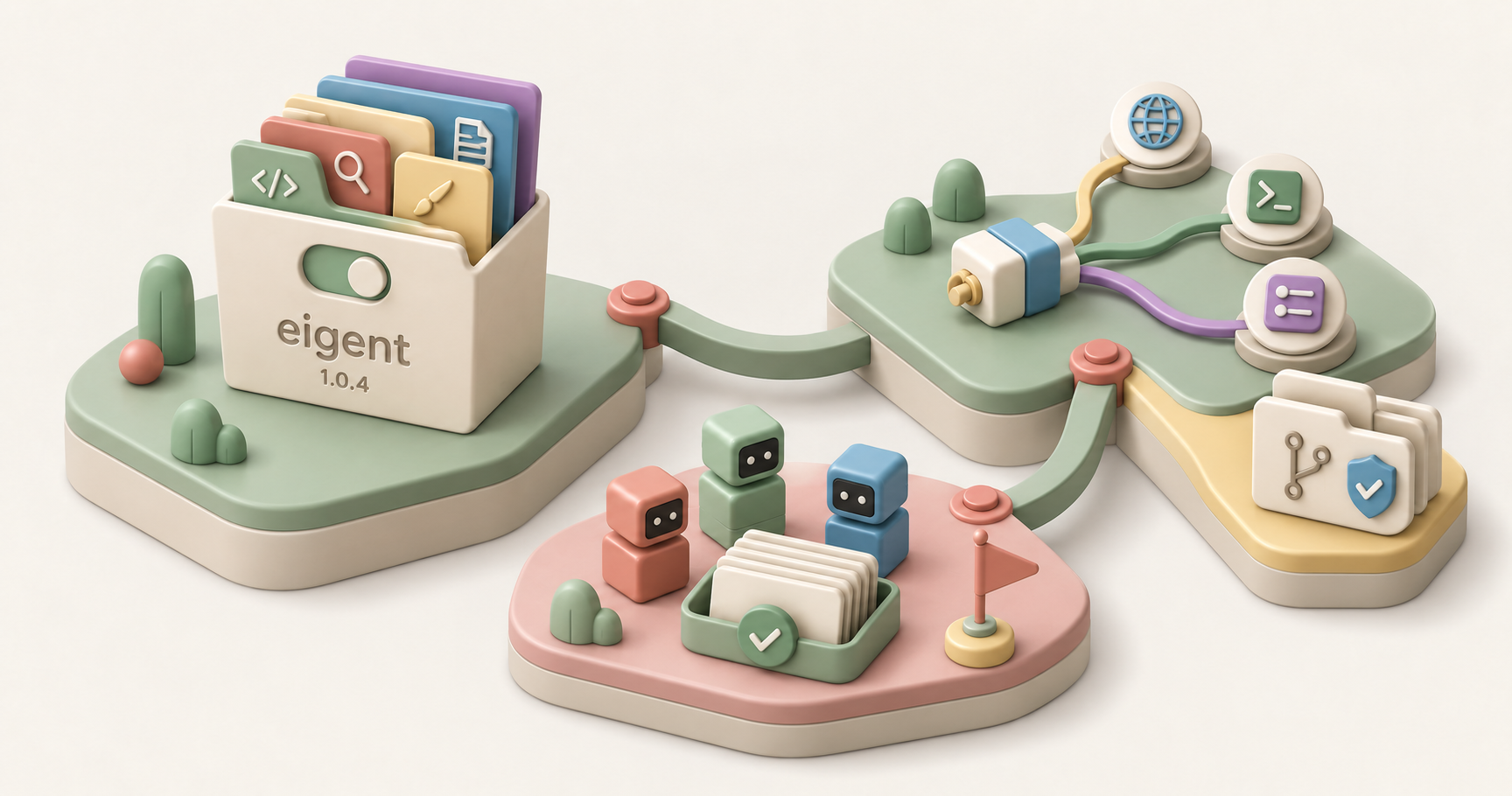
Notes de version d’Eigent v1.0.4 : tableaux de bord Skills et Connectors, exécutions multitours fiables
Eigent v1.0.4 refond Skills et Connectors en tableaux de bord de gestion et renforce le travail multitours, les points de contrôle du workspace et les états de connecteur.
Douglas Lai
Claude Fable 5.1 et Mythos 5.1 : Les nouveautés expliquées
Claude Fable 5.1 et Mythos 5.1 expliqués : le même modèle en deux niveaux de protection, avec de nouveaux benchmarks, un coût réduit d'environ 25 à 45 %, et les détails d'accès.
Eigent


