
Jeden Blogbeitrag automatisch in einen Tweet verwandeln
Social-Media-Teams verbringen erstaunlich viel Zeit mit einer scheinbar einfachen Aufgabe: einen Blogbeitrag lesen und daraus einen Tweet machen. Das klingt schnell, aber wenn man das auf 20 Beiträge pro Woche hochrechnet, wird es zu einem echten Zeitfresser. Eigent kann das Ende-zu-Ende übernehmen — den Quellinhalt lesen, den Beitrag entwerfen und ihn veröffentlichen — ohne dass du Twitter jemals öffnest.
Den Twitter MCP einrichten
Dieser Workflow nutzt einen angepassten Twitter MCP-(Model Context Protocol-)Connector, der Eigent die Möglichkeit gibt, direkt auf deinem Twitter/X-Konto zu posten. Falls du ihn noch nicht eingerichtet hast, gehe in Eigent zu Einstellungen → Connectoren und richte die Twitter-Integration mit deinen API-Zugangsdaten ein.
Sobald der MCP verbunden ist, kann Eigent deine Timeline lesen, Beiträge entwerfen und veröffentlichen — alles über eine einzige Eingabeaufforderung. Dieser Workflow nutzt außerdem ein Open-Source-Self-Hosted-Modell, das den Twitter Agent antreibt, sodass deine Inhalte in deiner eigenen Infrastruktur bleiben.
Eigent auf den Blogbeitrag ausrichten
Gib Eigent die URL des Blogbeitrags, den du in einen Tweet umwandeln möchtest:
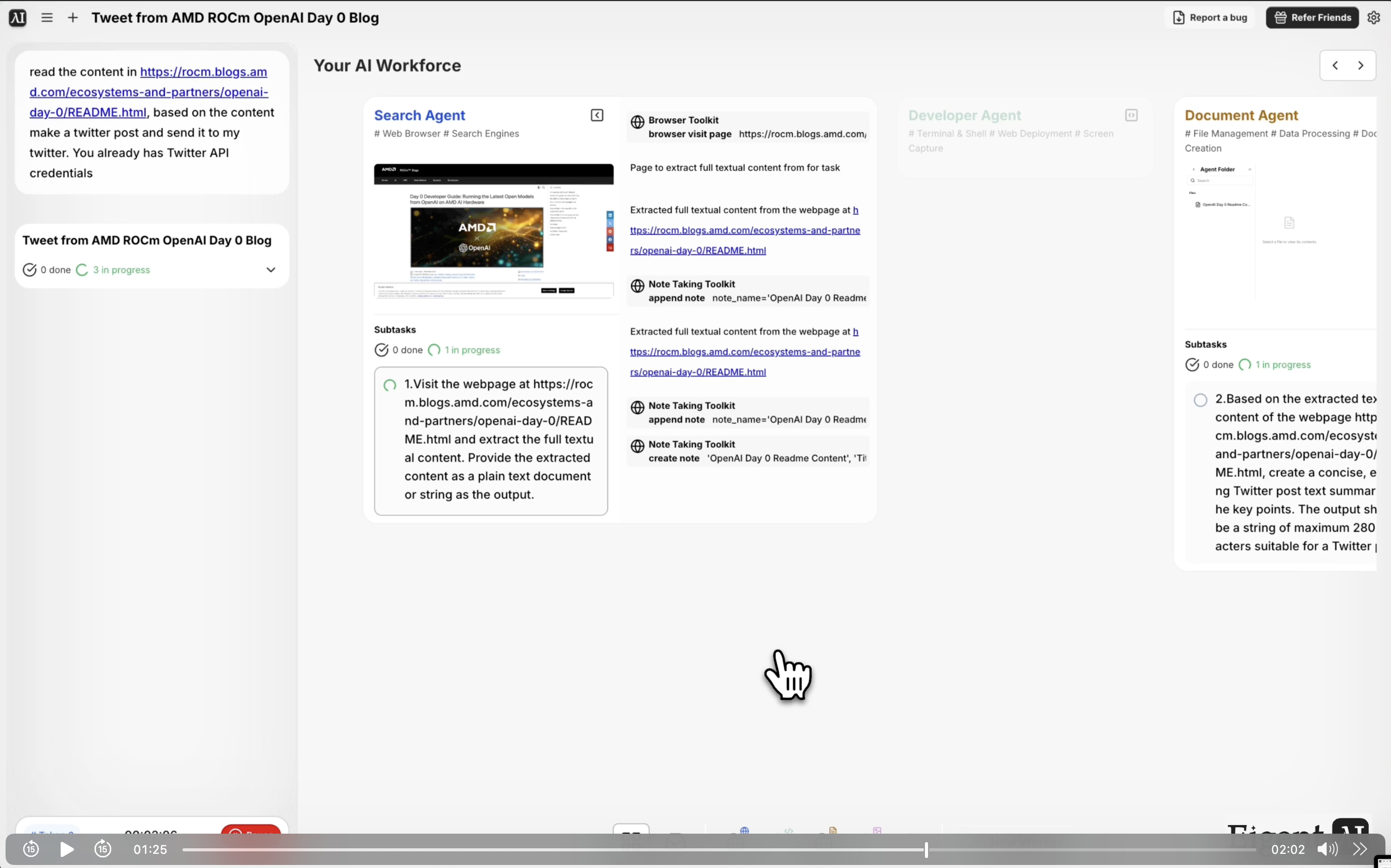
Lies den Inhalt von [URL], erstelle darauf basierend einen Twitter-Beitrag und sende ihn an mein Twitter-Konto.
Du kannst den Text auch direkt in den Chat einfügen, wenn der Beitrag hinter einem Login liegt oder wenn du lieber keine URL teilen möchtest.
Eigent liest und fasst den Inhalt zusammen
Der Browser-Agent von Eigent ruft den Blogbeitrag ab und extrahiert die wichtigsten Punkte — die Überschrift, die Hauptaussage, bemerkenswerte Statistiken oder die zitierfähigste Erkenntnis. Anschließend entwirft er einen Tweet, der innerhalb des Zeichenlimits bleibt, die Kernbotschaft bewahrt und sich für ein Social-Media-Publikum natürlich liest.
Wenn deine Marke einen bestimmten Ton hat (locker, autoritativ, technisch), füge das in die Eingabeaufforderung ein, und der Agent passt sich daran an.
Vor dem Veröffentlichen prüfen (optional)
Standardmäßig veröffentlicht Eigent den Tweet sofort nach dem Entwurf. Wenn du lieber zuerst prüfen möchtest, füge diese Anweisung zu deiner Eingabeaufforderung hinzu:
Zeige mir den Tweet-Entwurf vor dem Posten.
Eigent zeigt dir den vorgeschlagenen Tweet zur Freigabe, bevor er gesendet wird.
Auf Twitter veröffentlichen
Sobald genehmigt — oder sofort, wenn du den Prüfschritt überspringst — veröffentlicht Eigent den Tweet über den Twitter MCP. Du erhältst eine Bestätigung mit der Post-URL, damit du ihn live auf Twitter ansehen kannst.
Warum das wichtig ist
Dieser Workflow ist ein kleines Beispiel für ein größeres Muster: Eigent nutzt man, um den Kreislauf zwischen Inhaltserstellung und Distribution zu schließen. Du erstellst den Blogbeitrag, Eigent übernimmt die Verbreitung in sozialen Netzwerken. Derselbe Ansatz lässt sich auf LinkedIn-Posts, Newsletter-Auszüge oder jedes andere Format anwenden, bei dem Quellmaterial gelesen und für einen neuen Kanal angepasst werden muss — und weil er auf einem lokalen Modell läuft, funktioniert er auch in datenschutzsensiblen Umgebungen.
Was du als Nächstes ausprobieren kannst
Lies die fünf meistgelesenen Beiträge dieser Woche aus unserem Blog und erstelle für jeden eine Tweet-Thread-Zusammenfassung.
Erstelle aus diesem Inhalt eine LinkedIn-Post-Version in längerer Form.
Prüfe mein Twitter-Engagement der letzten Woche und sag mir, welche Posts am besten abgeschnitten haben.
Verwandle diesen Blogbeitrag in ein kurzes Videoskript für einen Social-Media-Reel.
Tipps für bessere Ergebnisse
-
Den Ton festlegen. "Mach es unterhaltsam und füge relevante Hashtags hinzu" oder "bleib professionell und nenne den Handle des Autors" gibt Eigent viel mehr Kontext als nur eine nackte URL.
-
Einen Call-to-Action einfügen. Wenn der Tweet Traffic zurück zum Beitrag bringen soll, bitte Eigent darum, den Link und einen CTA wie "Mehr lesen →" einzufügen.
-
Den Prüfschritt bei den ersten Durchläufen nutzen. Verwende bei den ersten Beiträgen mit einem neuen Blog oder einer neuen Markenstimme die Option „vor dem Posten prüfen“, bis du mit der Qualität der Ausgabe zufrieden bist.