
Zamień swoje gwiazdki GitHub w listę kontaktów
Każda gwiazdka GitHub to sygnał. Ktoś uznał Twoje repozytorium za na tyle interesujące, że dodał je do zakładek — a w większości przypadków na swojej stronie GitHub podał też profil LinkedIn albo Twitter/X. Eigent może przejść przez profil każdego stargazera i wyodrębnić te dane do uporządkowanej tabeli, dając Ci gotową listę potencjalnych użytkowników, współtwórców lub odbiorców do kontaktu.
Zidentyfikuj repozytorium
Zacznij od wskazania Eigent, z którego repozytorium GitHub ma pobrać stargazerów. W tym przepływie pracy celem jest repozytorium open source Eigent:
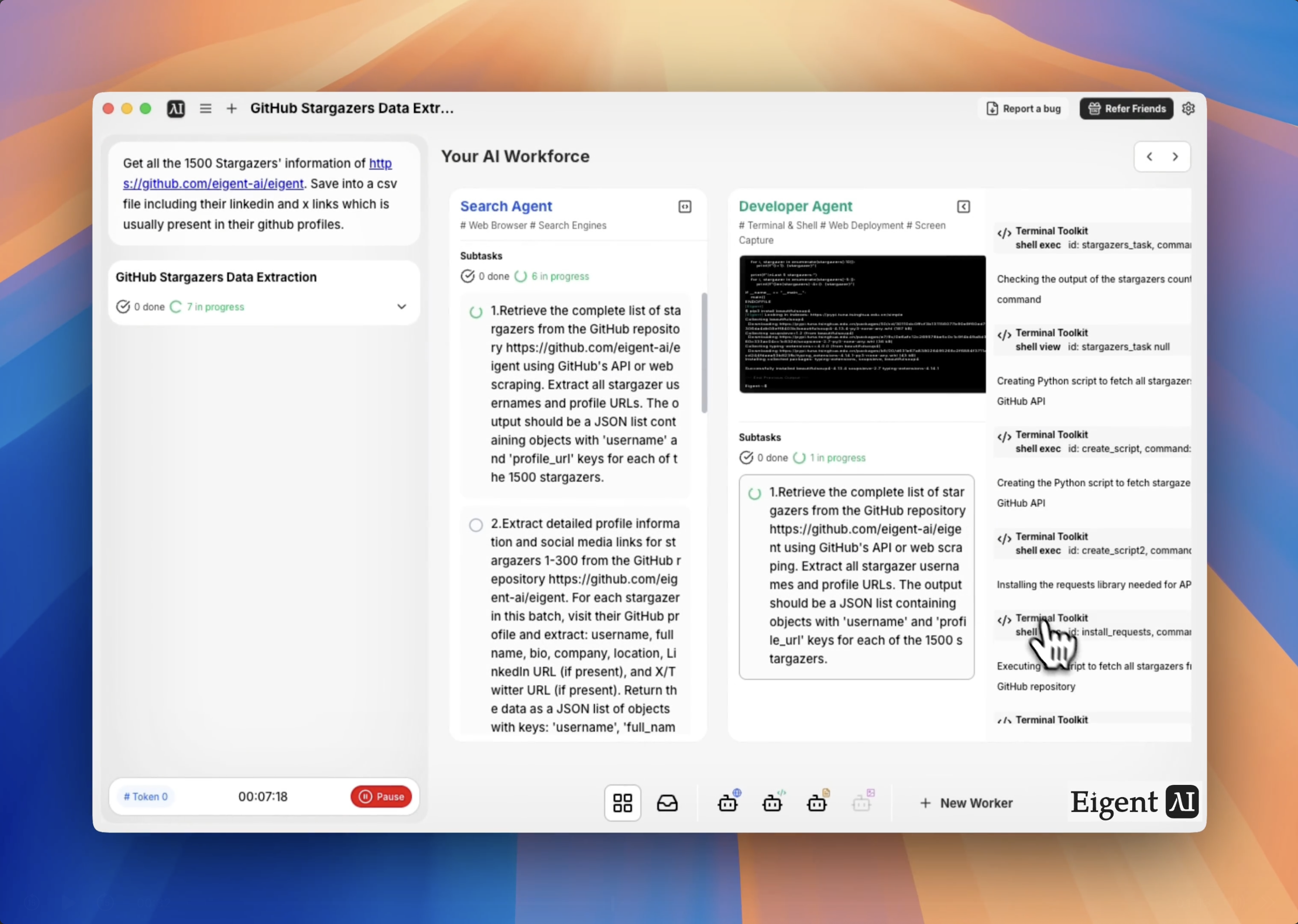
Pobierz wszystkie informacje o stargazerach z https://github.com/eigent-ai/eigent. Zapisz je w tabeli zawierającej ich linki do LinkedIn i X, które zwykle są obecne w ich profilach GitHub.
Możesz podmienić ten adres URL na dowolne publiczne repozytorium GitHub. Ten przepływ pracy skaluje się do repozytoriów z tysiącami gwiazdek.
Eigent pobiera listę stargazerów
Eigent przechodzi na stronę stargazerów repozytorium i zbiera każdą nazwę użytkownika. W zależności od łącznej liczby może przechodzić przez wiele stron wyników. Agent przeglądarki obsługuje to automatycznie — nie musisz martwić się ograniczeniami paginacji ani limitami zapytań.
Wzbogacanie profilu
Dla każdego stargazera Eigent odwiedza stronę jego profilu GitHub, aby zebrać:
- Nazwę użytkownika oraz wyświetlaną nazwę (jeśli ustawiona)
- Adres URL profilu GitHub
- Adres URL LinkedIn (jeśli podany w profilu)
- Adres URL X (Twitter) (jeśli podany w profilu)
- Bio lub lokalizację (opcjonalnie, jeśli poproszono)
Ten krok wzbogacania działa równolegle dla wielu profili, aby całkowity czas pozostał rozsądny nawet w przypadku dużych repozytoriów.
Wynik w formie tabeli
Końcowy wynik to uporządkowana tabela danych — zapisana jako CSV lub wyświetlona bezpośrednio — z jednym wierszem na każdego stargazera i kolumnami dla każdego punktu danych. Tabela jest gotowa do importu do CRM, eksportu do Google Sheets lub wykorzystania jako podstawa kampanii outreach.
Filtrowanie i segmentacja
Po początkowej ekstrakcji możesz poprosić Eigent o filtrowanie lub segmentację danych:
Przefiltruj tę listę tak, aby zawierała tylko stargazerów, którzy mają podany profil LinkedIn.
Pokaż mi tylko stargazerów, którzy mają więcej niż 100 obserwujących na GitHub.
Posortuj według najnowszej gwiazdki.
Dlaczego to ma znaczenie
W projektach open source lista stargazerów to jeden z najcenniejszych i najbardziej niedocenianych zasobów, jakimi dysponujesz. To osoby, które już same zakwalifikowały się jako zainteresowane tym, co tworzysz. Eigent zamienia pasywną próżnościową metrykę w użyteczną bazę kontaktów — bez ręcznego klikania profili i kopiowania danych.
Co warto wypróbować dalej
Wykonaj tę samą ekstrakcję dla trzech repozytoriów konkurencji i połącz wyniki.
Sprawdź, którzy z naszych stargazerów są również współtwórcami podobnych projektów open source.
Porównaj tę listę z naszą istniejącą bazą użytkowników, aby ustalić, kto jeszcze się nie zarejestrował.
Wyślij spersonalizowaną wiadomość outreach do 50 najlepszych stargazerów, którzy mają profil LinkedIn.
Wskazówki dla lepszych wyników
-
Najpierw uruchom to na mniejszych repozytoriach. W przypadku repozytoriów z ponad 10 000 gwiazdek etap wzbogacania trwa dłużej. Przetestuj prompt na mniejszym repozytorium, zanim uruchomisz go na pełną skalę.
-
Podaj konkretne pola. Jeśli potrzebujesz tylko linków do LinkedIn i nie potrzebujesz X/Twitter, napisz to — Eigent pominie dodatkowe parsowanie profilu i zadziała szybciej.
-
Poproś też o podsumowanie. Dodanie „powiedz mi też, jakie są najczęściej występujące domeny pracodawców i lokalizacje podane w profilach” daje Ci od razu wgląd w odbiorców, oprócz surowej listy.