





 AgenticRL-Bench
 Env-Lab

What Is NVIDIA Nemotron for Science? Open Models for Research Agents
NVIDIA's SC26 release bundles the open Nemotron 3.5 Super VL model, a 50,000-question chemistry dataset, and post-training recipes for building scientific AI agents.
 Eigent
NVIDIA just introduced Nemotron for Science, an open collection of models, datasets, and recipes for building AI agents that do real scientific work — reasoning through chemistry and biology problems, calling research tools, and checking their own results. Announced at the SC26 supercomputing conference, it packages the open Nemotron 3.5 Super VL model with a new chemistry dataset and post-training guides. Here's what it includes, who's already using it, and whether it's worth your attention.
What is NVIDIA Nemotron for Science?
NVIDIA Nemotron for Science is a bundle of open AI resources aimed at scientific research agents, not a single new model. NVIDIA introduced it at SC26 in Chicago on November 16, 2026, bringing together scientific applications of its Nemotron 3.5 Super VL open model, a new open chemistry dataset, and post-training recipes to help researchers build specialized agents for scientific discovery.
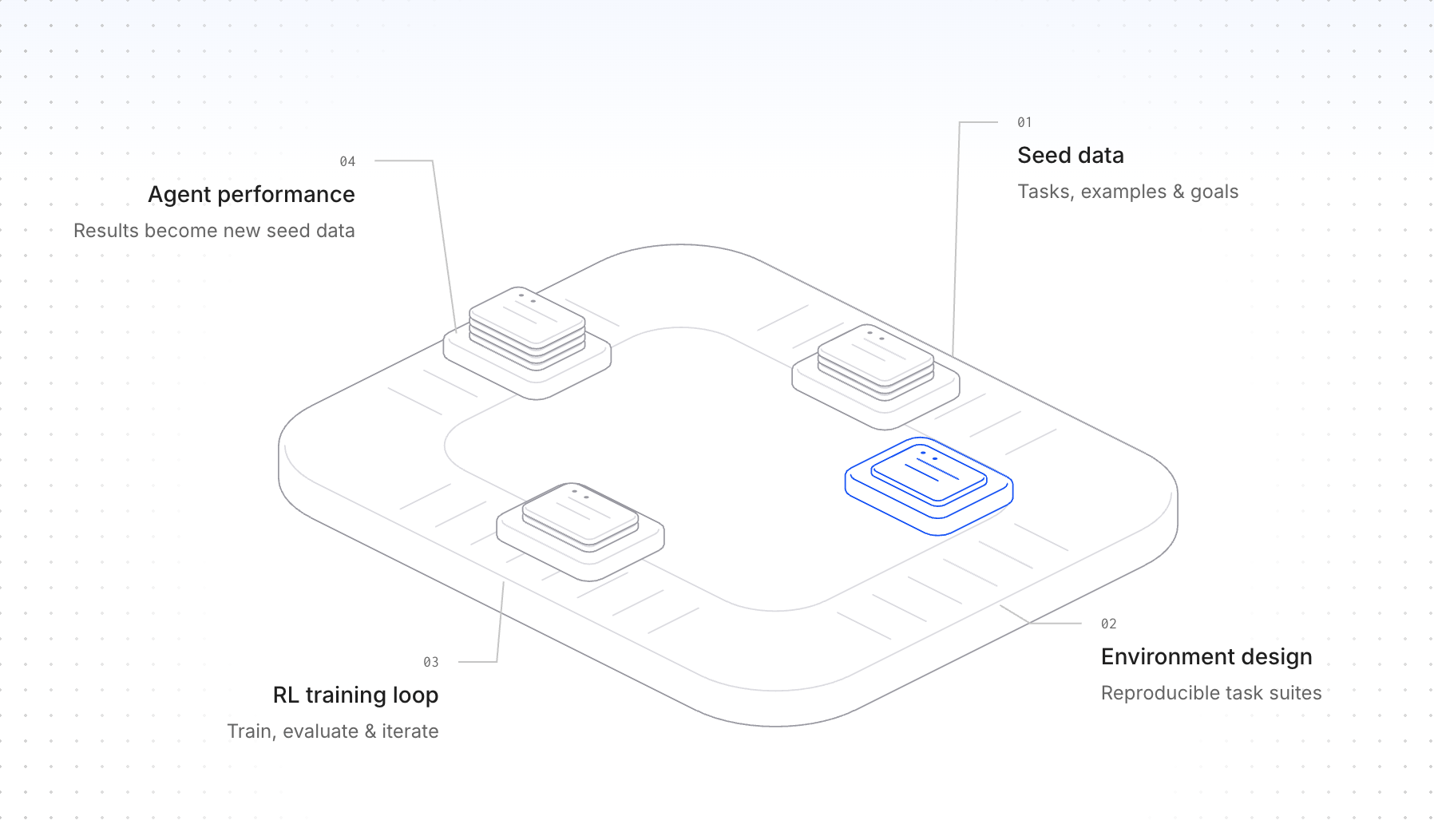
The idea is to give researchers the pieces to build agents that can plan tasks, run simulations, check results, and self-correct across iterations — rather than just chat about science. The collection has four parts:
- Nemotron 3.5 Super VL — the open, multimodal reasoning model the agents are built on.
- LitmusBench v0.2 — a new open chemistry dataset for training and evaluating models on chemical reasoning.
- Post-training recipes — reinforcement learning and distillation workflows to adapt the model to a specific scientific domain.
- Scientific evaluations — benchmarks to measure whether a customized model actually improved.
NVIDIA frames the goal plainly. "Nemotron for Science gives researchers open models, scientific data and post-training recipes to build specialized agents that reason through scientific problems and use CUDA-X accelerated tools to turn ideas into discoveries," said Ian Buck, NVIDIA's vice president of hyperscale and high-performance computing.
The model: Nemotron 3.5 Super VL
The foundation is Nemotron 3.5 Super VL, NVIDIA's open 120-billion-parameter multimodal model that activates 12B parameters per token. It combines reasoning, tool use, and the ability to read text, images, charts, and multi-page documents in a single checkpoint — which is exactly the kind of mixed material scientific papers and lab records are full of.
Built on Super VL, Nemotron for Science helps researchers develop agents that reason through scientific problems and put specialized research tools to work. With post-training, scientists can adapt the model to specialized tasks such as running chemistry experiments and protein design.
The model is available now on Hugging Face, and NVIDIA says it was optimized to run locally on a 128GB NVIDIA DGX Spark system.
LitmusBench v0.2: the chemistry dataset
The headline new piece is the data. LitmusBench v0.2 is a new open dataset with nearly 50,000 questions for training and evaluating language models on chemistry reasoning. It draws on molecular properties and experimental drug discovery data, and is meant to help researchers improve a model's ability to predict how molecules behave — including their solubility and how the human body processes them.
In NVIDIA's technical materials, the same dataset is referred to as the Nemotron Litmus-Bench, and it supports both evaluation and post-training. That dual role matters: the same questions that grade a model can also be used to train it, so a lab can measure a weakness and then close it with the same data.
How post-training works
The real pitch of Nemotron for Science is customization. A general model is a starting point; the recipes show how to turn it into a domain specialist using reinforcement learning with verifiable rewards.
NVIDIA's post-training walkthrough uses drug-metabolism prediction as the worked example. Given a parent molecule and its transforming enzyme, the model predicts the resulting metabolite. The clever part is the reward: instead of human preference labels, the experimental ground truth scores the answer directly, by comparing the predicted and reference molecular fingerprints with a similarity metric. The reward comes straight from the data.
The reported gains are concrete. On that drug-metabolism task at a 16,384-token output budget, NVIDIA says supervised fine-tuning improved accuracy by 12%, and reinforcement learning post-training lifted it a further 17%. An optional "warm-start" step distills reasoning traces from a stronger teacher model — in NVIDIA's example, Anthropic's Claude Sonnet 5.5 — to speed up convergence before the RL loop begins.
The point for teams: you don't need a frontier model to get frontier-level results on a narrow task. You need a good open model, your own experimental data, and a reward that measures the scientific outcome you actually care about.
Who's already using it
NVIDIA's launch leans on named partners and labs rather than benchmarks alone, which makes the claims easier to weigh:
- Terray Therapeutics post-trained Nemotron to pull reactants, products, and reaction conditions out of scientific diagrams. NVIDIA reports it recovered about 76% of annotated reactions on the RxnScribe test under the benchmark's matching criteria, surpassing previously published results on two benchmarks.
- Lila Sciences used it to design execution-ready lab protocols. Post-training with lab feedback nearly doubled accuracy for making quantum dots to 61%, which NVIDIA says exceeds GPT-6 Astra's 54% at 10–20x lower inference cost.
- Therna post-trained Nemotron for agentic mRNA therapeutic design, nearly doubling accuracy at predicting protein-expression ranges over frontier models. NVIDIA reports scientists preferred its explanations over the base model in 96% of comparisons.
- Argonne National Laboratory is integrating Nemotron into its StructBioReasoner multi-agent system to design and evaluate protein-based therapeutic candidates for cancer and other diseases.
- KTH Royal Institute of Technology built an agent that repairs broken GROMACS molecular dynamics setups on its own. NVIDIA says that in one overnight run on a single DGX Spark, the agent fixed 81% of test cases with reasoning enabled, with every fix independently checked by GROMACS.
These are vendor-reported, workload-specific numbers from NVIDIA's launch materials — read them as what the stack can reach with tuning on a defined task, not guaranteed defaults. As with any launch, treat the figures as NVIDIA's own measurements until third parties reproduce them.
How it compares to other "AI scientist" efforts
Nemotron for Science is a toolkit, not a finished scientist. That distinguishes it from systems trained end-to-end for autonomous discovery, like Periodic Labs' Neon, or domain-specific foundation models like the genome model behind Omnii-1. NVIDIA's bet is horizontal: ship an open model plus the data and recipes, and let each lab build its own specialist.
That's a meaningful difference in practice. You own the weights, keep your data on infrastructure you control, and tune for your exact task. The trade-off is familiar from the rest of the Nemotron line — the efficiency and serving story leans heavily on NVIDIA hardware, from a single DGX Spark on a desk up to supercomputing centers.
Should you care?
If you build research or lab-automation agents and have your own experimental data, Nemotron for Science is worth a close look: open weights, a real chemistry dataset, a credible post-training path, and partners showing it works on narrow tasks. If you just want a general science chatbot, this isn't that — it's infrastructure for building specialized agents, and it rewards teams willing to post-train.
For context on the base model's architecture, benchmarks, and licensing, see our full breakdown of Nemotron 3.5 Super VL. NVIDIA first shared the launch in a post on X.
Build your own science agents with an AI workforce
Nemotron for Science shows the pattern: an agent that plans a task, calls real tools, checks its own output, and iterates. Eigent is an open-source Cowork desktop app that orchestrates exactly those multi-agent workflows locally — point a team of agents at your own documents, data, and tools and let them run multistep work on infrastructure you control. See how it handles document-heavy review workflows, or download Eigent to build your own agent team.
Recent Posts

Eigent Release Notes v1.0.8: A New Home, Global Search & Clearer Conversations
Eigent v1.0.8 introduces a redesigned Home, search across Spaces, a new composer, and a default conversation timeline that makes agent work easier to follow.
 Douglas Lai
GPT-6.2 Astra and Sol: What's New, Pricing, and Benchmarks
GPT-6.2 Astra and Sol are OpenAI's newest models for ChatGPT Work, Codex, and the API. Here's what changed, the pricing, the benchmarks, and which to use.
Eigent
Claude Fable 5.2 and Mythos 5.2: What's New, Explained
Claude Fable 5.2 and Mythos 5.2 explained: lower pricing at $8/$40 per million tokens, up to 30% faster output, new benchmarks, and who can access each tier.
Eigent


